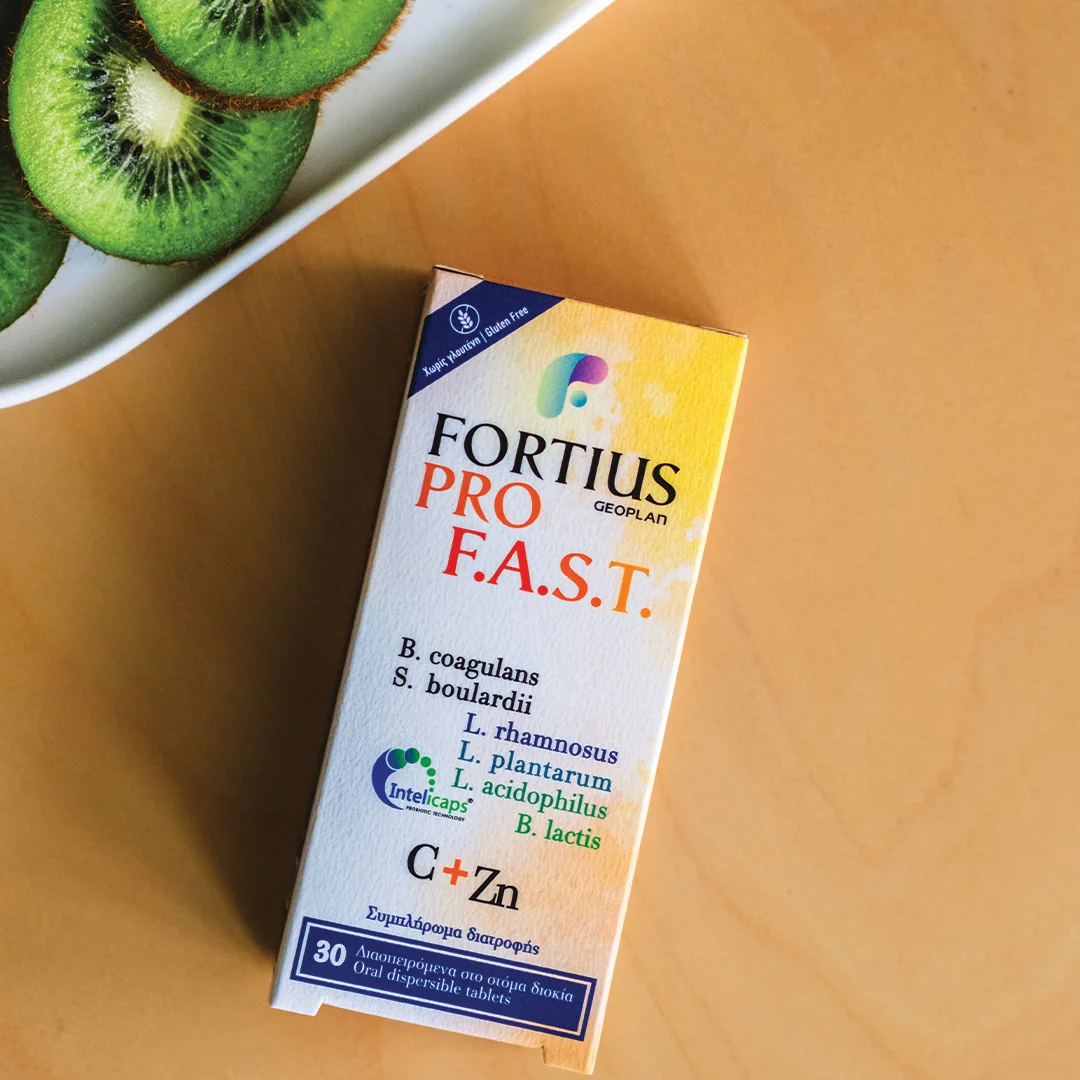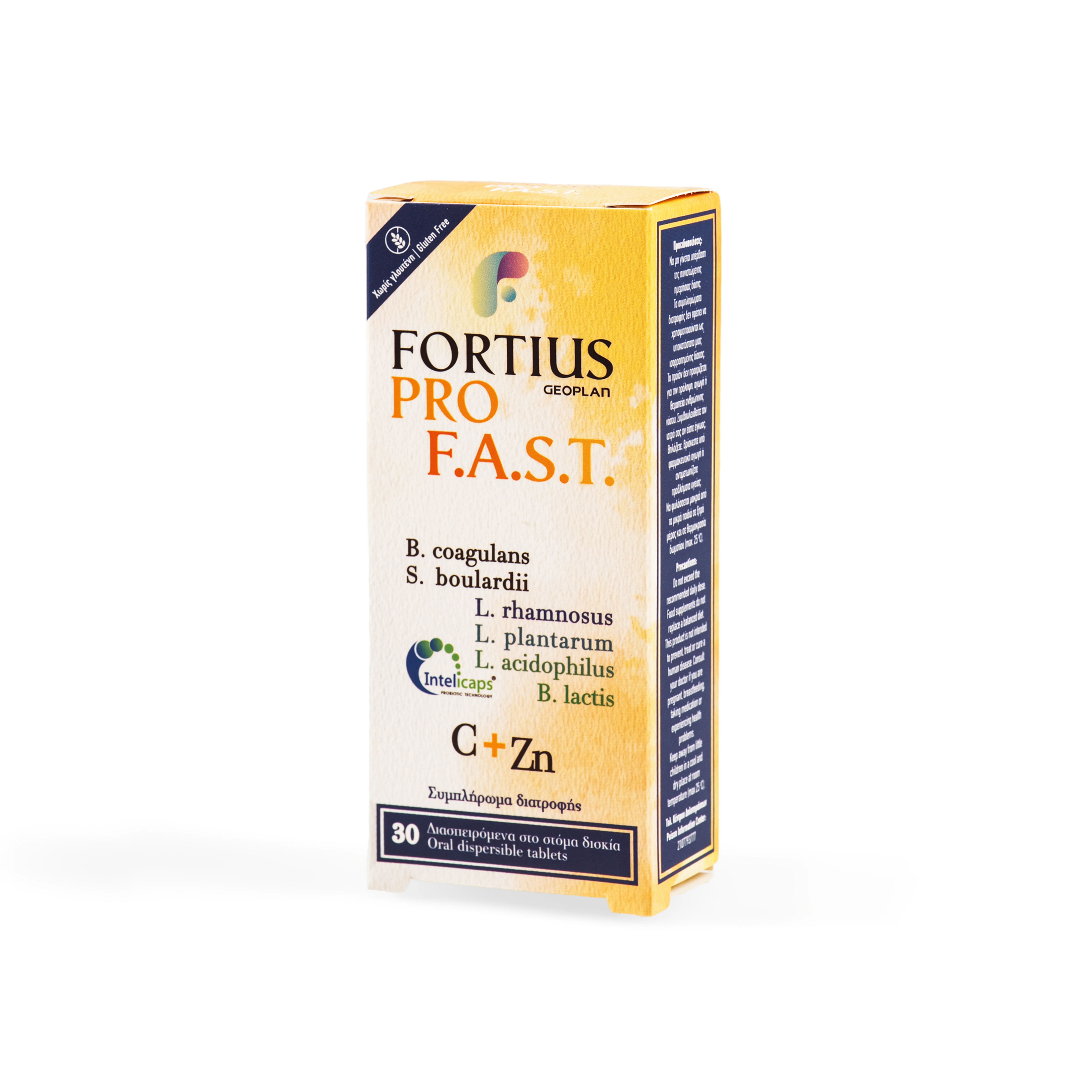
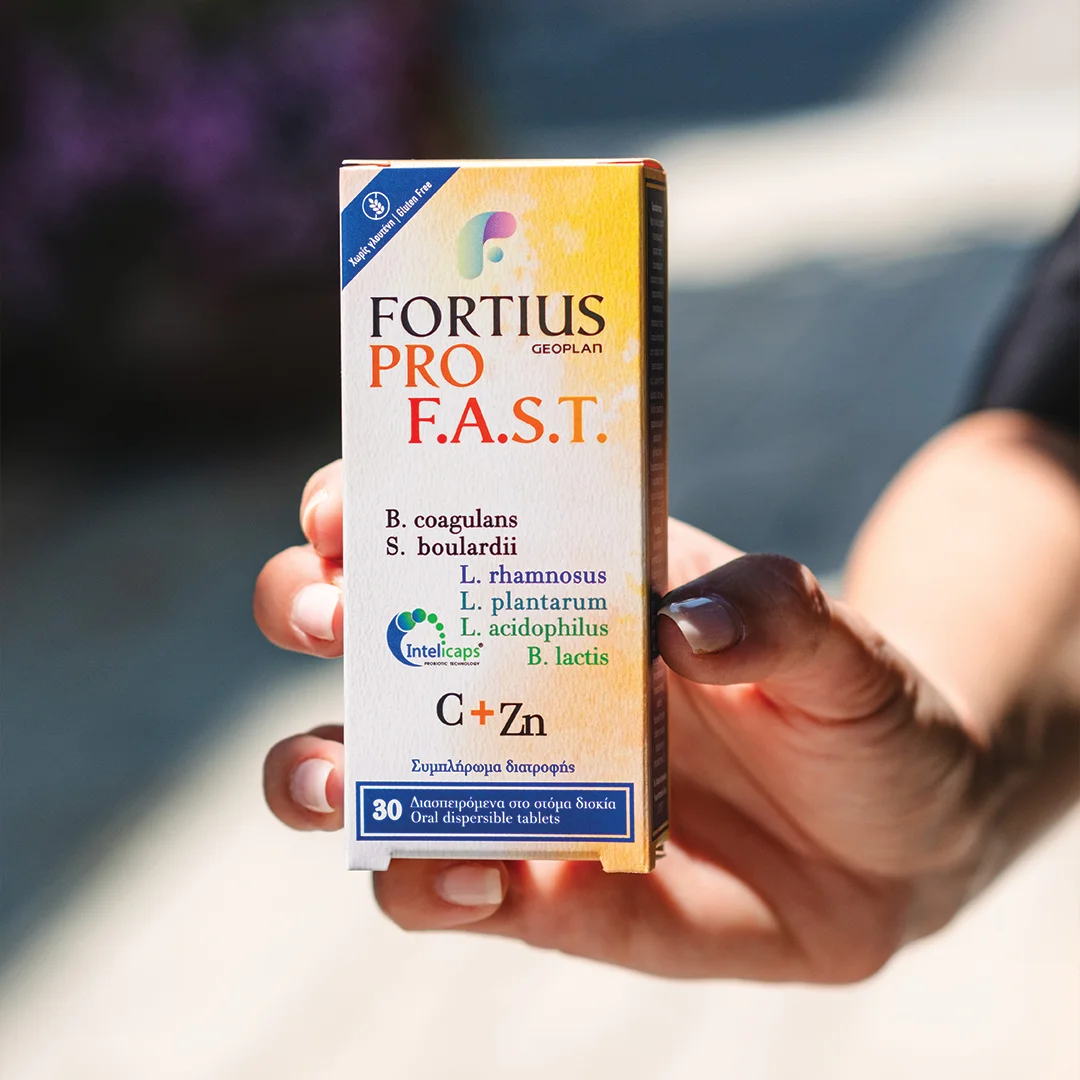
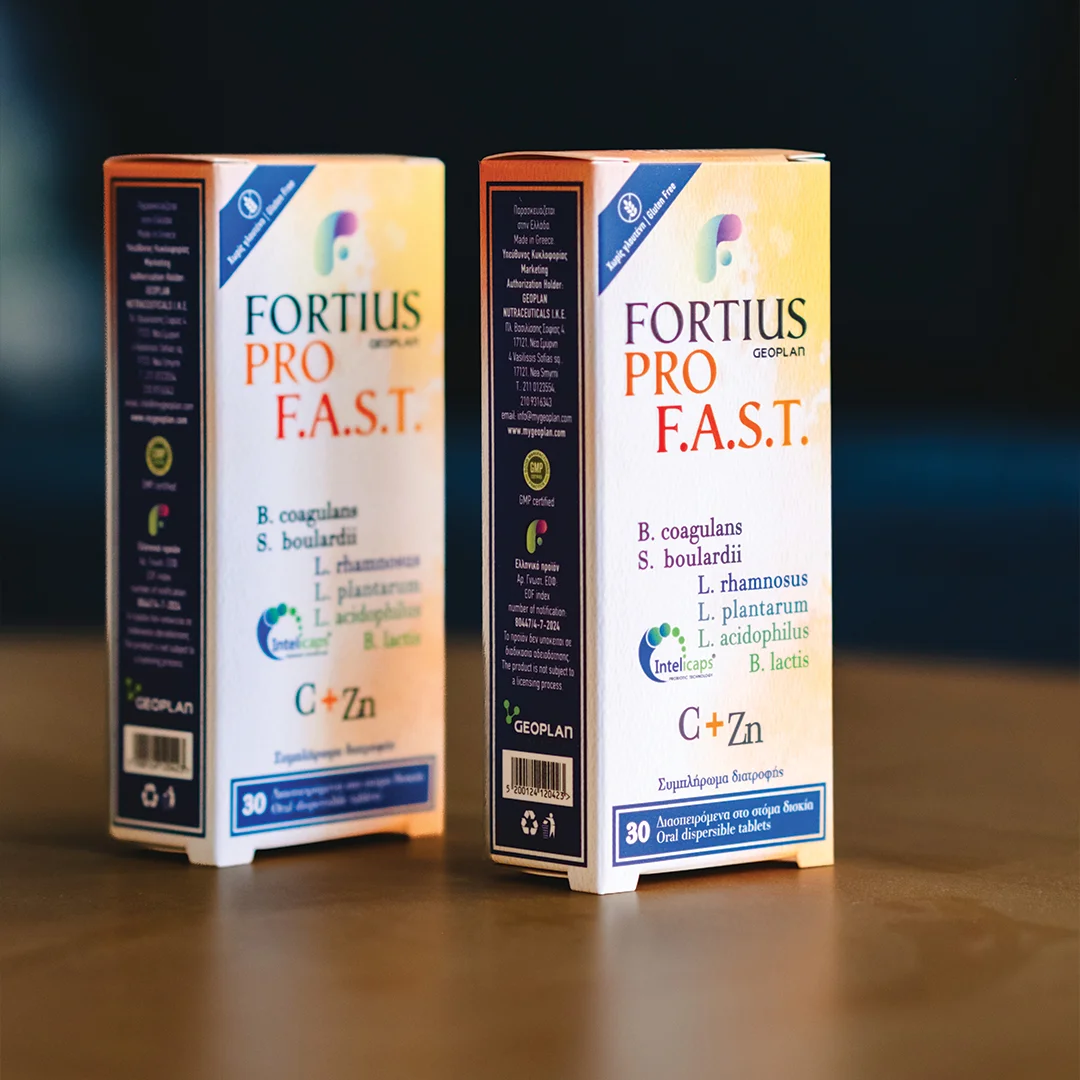
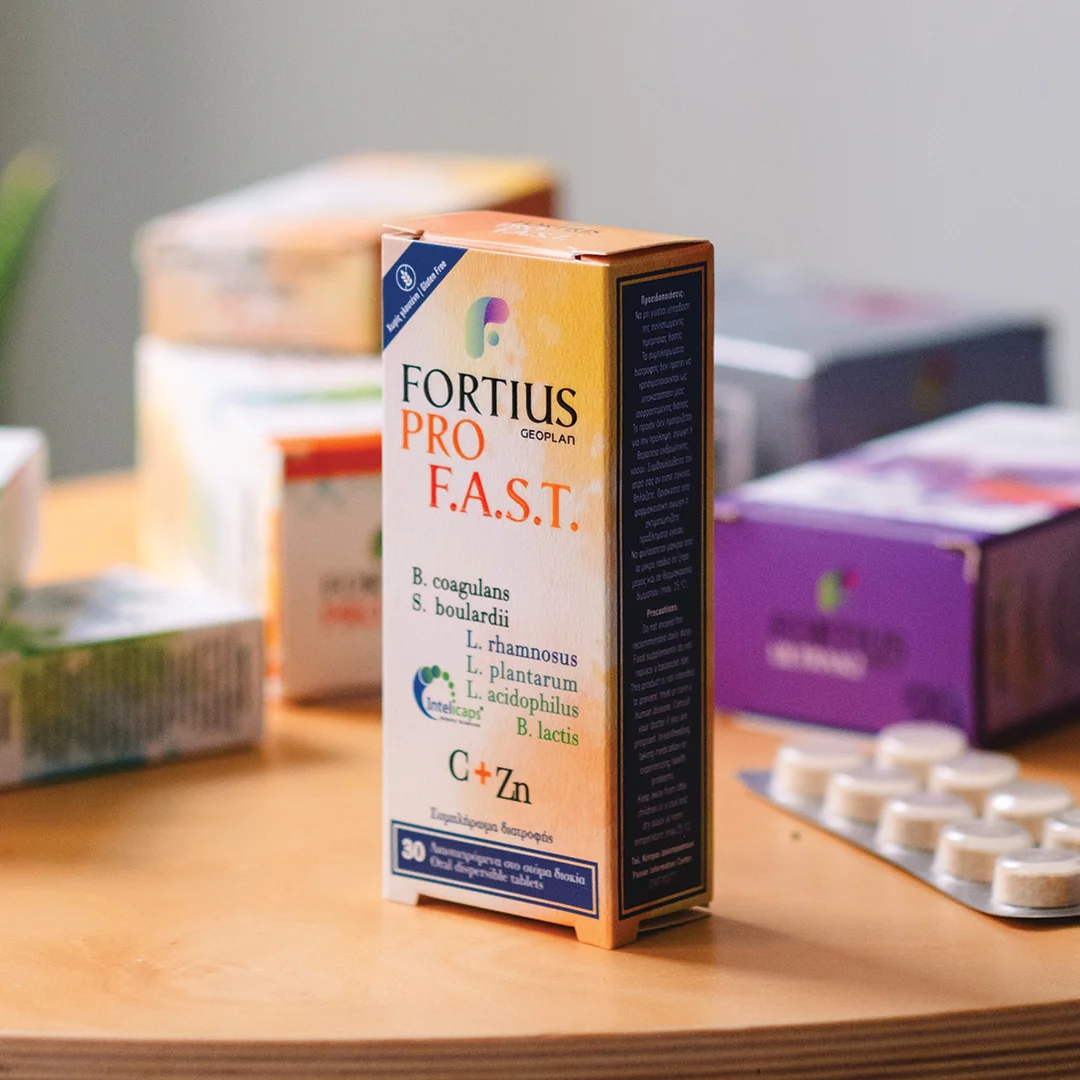
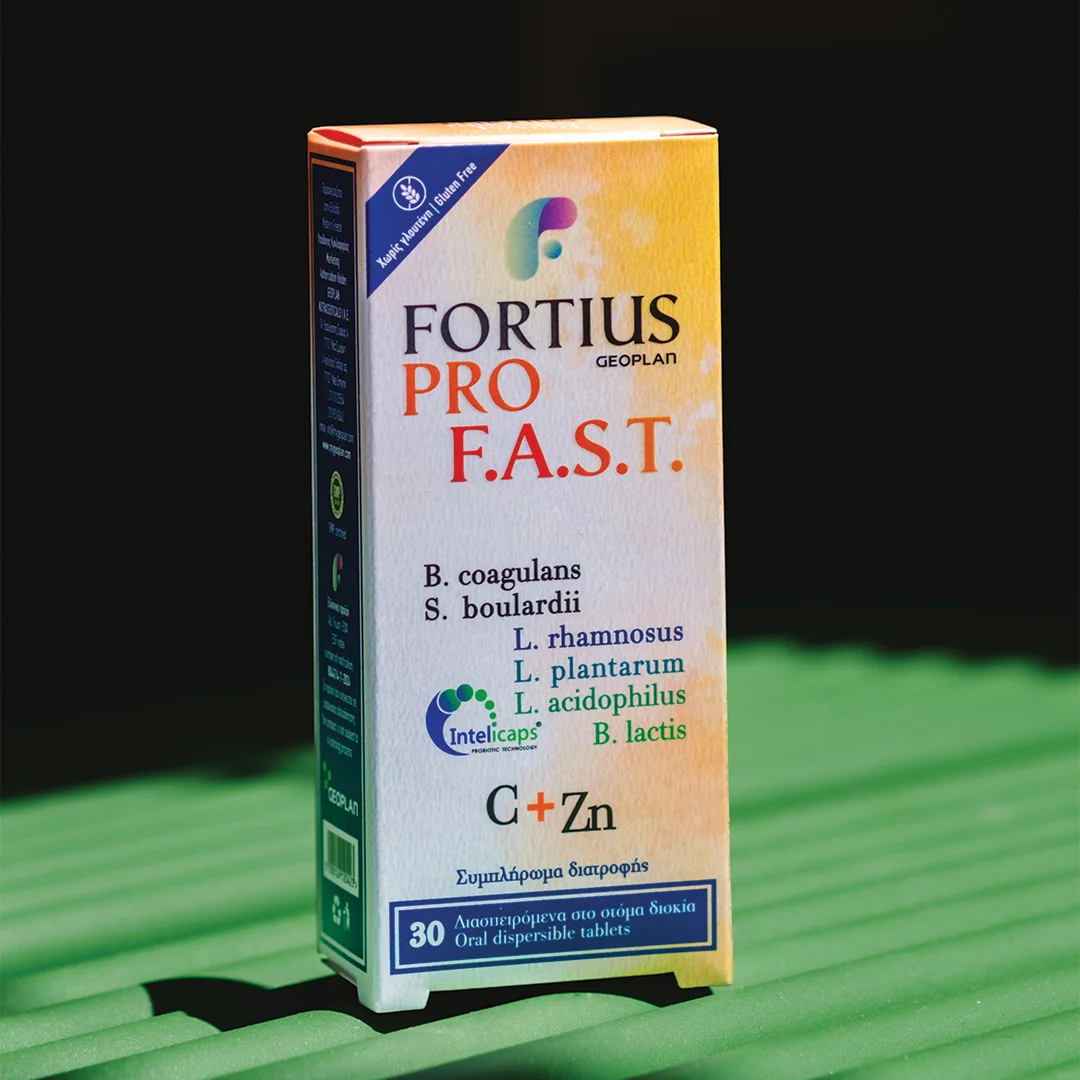
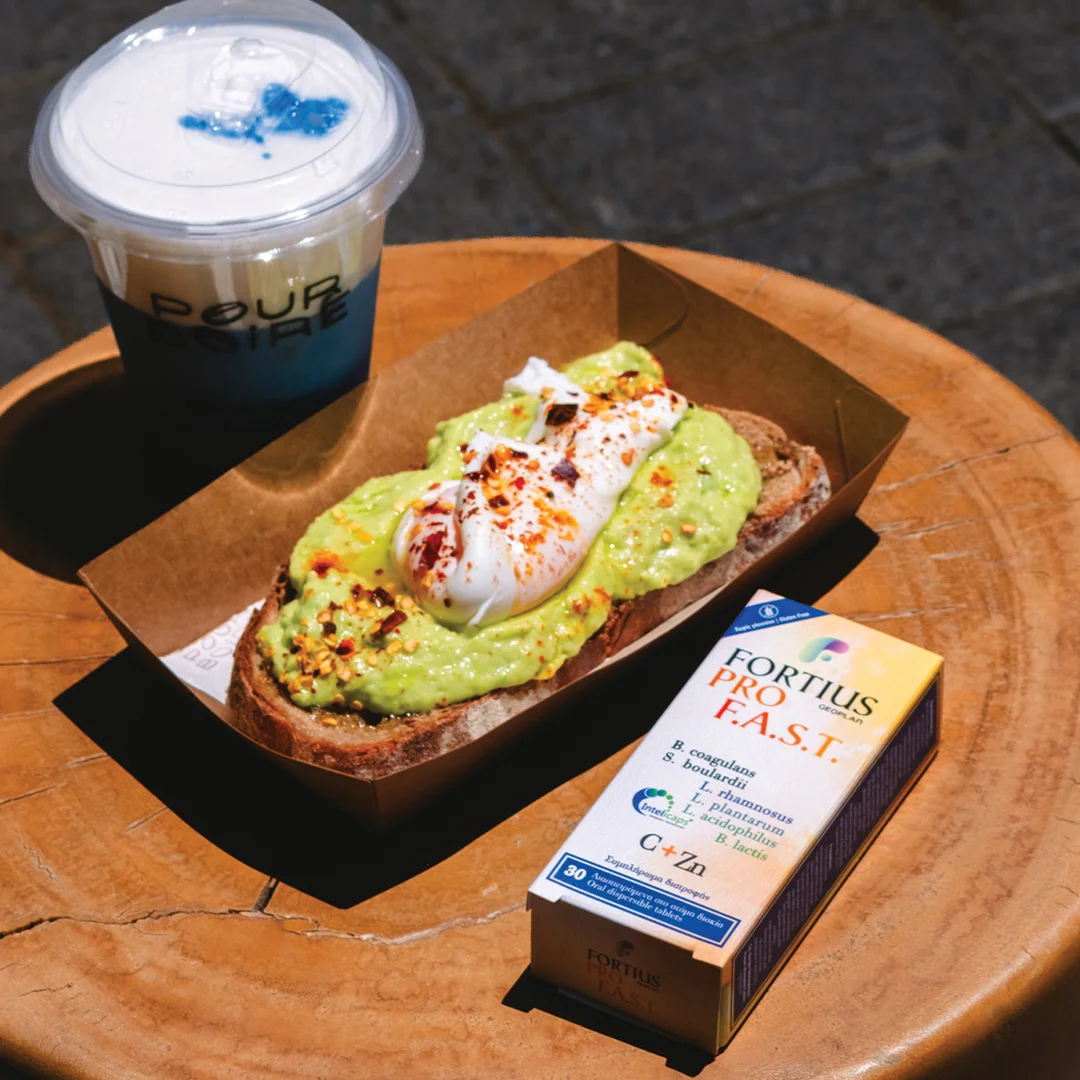


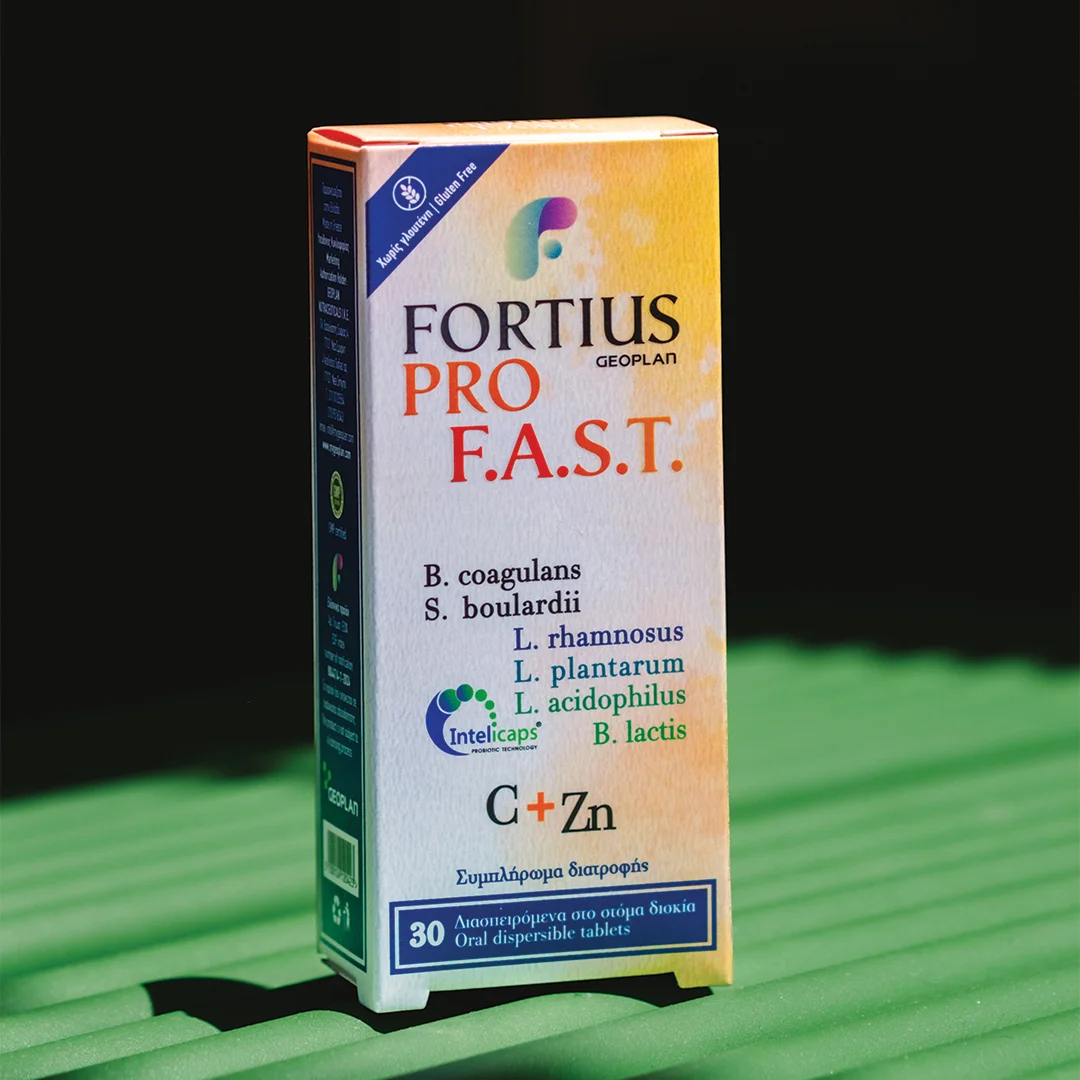
The powerful benefits of FORTIUS Pro F.A.S.T.
1000 times greater survival – Intelicaps® microencapsulation technology
The mixture of 4 probiotics Lactobacillus rhamnosus, Lactobacillus plantarum, Lactobacillus acidophilus, Bifidobacterium lactis, microencapsulated with Intelicaps® technology for protection. Intelicaps® technology is a globally patented micro- encapsulation method for live microorganisms (probiotics), which provides exceptional stability and protection for probiotics, allowing them to survive passage through the stomach’s acidic environment. Find out more here.
Probiotics and the microbiome
The most important probiotic strains for the gut microbiome belong primarily to two major genera: Lactobacillus and Bifidobacterium. Other beneficial microorganisms include the yeast Saccharomyces boulardii and the strain Bacillus coagulans. Their key actions in the microbiome include: strengthening the intestinal barrier; promoting anti-inflammatory activity in the intestinal mucosa and helping reduce inflammation, supporting the immune response, helping inhibit the colonization and growth of pathogenic bacteria through competitive mechanisms – including reduction in Clostridia and Veillonella, and producing or promoting beneficial metabolites.
Zinc and the microbiome
Zinc can indirectly influence the gut microbiome and intestinal function. It supports the intestinal barrier by helping maintain the integrity of intestinal cells and contributes to the normal function of the immune system, which interacts with the microbiome. Adequate zinc intake may therefore help support a more balanced intestinal environment.
Vitamin C and the microbiome
Vitamin C can indirectly influence the gut microbiome through its antioxidant and immune-supporting functions. By helping reduce oxidative stress in the gut, it can contribute to a more favorable environment for beneficial bacteria. At the same time, vitamin C supports the immune system and helps maintain the intestinal barrier, thereby helping reduce the risk of inflammation and disruption to intestinal balance.